

Beef tallow for skin: benefits, science & everyday care
Why tallow feels rich, how it helps soften dry skin, and what the research says about eczema, acne and other popular claims. A practical ingredient guide.
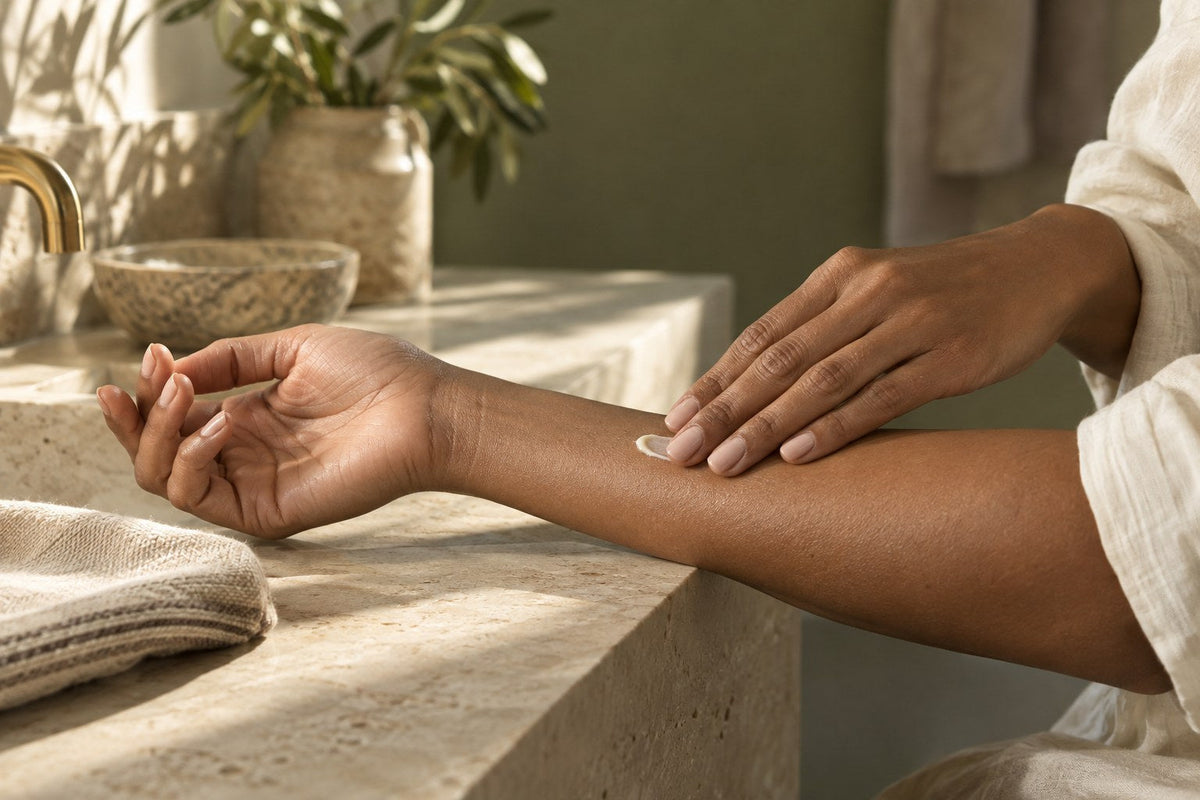
THE INGREDIENT EDIT · UPDATED SEPTEMBER 23, 2026
Beef tallow brings richness to a daily moisturizing routine. Its appeal starts with something tangible: softer-feeling skin, a supple finish, and a balm texture you can use in small, deliberate amounts.
Understanding that appeal means looking closely at the ingredient, the complete formula, and how you use it. Here is our guide to tallow’s role in skincare, the questions worth asking, and the details that help you choose well.
Rich moisture, explained
Two skincare terms explain why a balm feels different from a light lotion. An emollient softens and smooths the skin’s surface. An occlusive leaves a layer that helps slow moisture loss. Tallow’s rich fatty composition gives it a place in both conversations. Dermatologists at MD Anderson describe moisturizing and softening as its main potential skincare benefits.1
For someone who enjoys a substantial balm, that texture can make moisturizing a satisfying part of the day. Begin with a small amount, following the label. A lasting greasy layer is a practical cue to try less next time. The aim is an even, comfortable finish that fits your routine.

What is inside the ingredient?
Beef tallow is rendered cattle fat. Its lipids include triglycerides containing fatty acids such as oleic, palmitic, and stearic acid. These names describe its composition; they also help explain why tallow has a different consistency from a liquid oil. Source material and rendering influence the resulting fat.2
The finished formula deserves just as much attention. Oils, waxes, and the way ingredients are combined shape a balm’s spread, firmness, and finish. A whipped texture and a solid texture offer different experiences, even when both contain tallow. Shared fatty acids with skin do not make tallow identical to human sebum or establish that it absorbs better than other moisturizers.
A clear view of the benefits
Good ingredient knowledge separates a useful cosmetic function from a demonstrated treatment result. Here is where the evidence currently stands.
| The question | What we can say |
|---|---|
| Dryness & softness | Tallow can soften skin and help hold moisture at the surface. The result depends on the formula and the person.1 |
| Eczema | Direct human evidence does not establish beef tallow as an eczema treatment.3 |
| Acne | Acne-clearing claims are not established. Rich, heavy products may disagree with some acne-prone skin.1 |
| Vitamins | An ingredient’s vitamin content does not prove that a balm delivers a meaningful amount into skin.1 |
| Ageing & collagen | Softness does not establish wrinkle reversal or collagen stimulation. Laboratory antioxidant findings do not demonstrate these effects in people.2 |
Tallow and eczema: what matters
Moisturizing is an important part of eczema care. Beef tallow’s ability to soften dry skin, however, does not establish that it treats eczema’s inflammation or prevents flares. One frequently cited human study examined modified mutton tallow and walnut oil emulsions for moisturizing and formulation properties. It did not demonstrate that a beef-tallow balm treats eczema.4
For eczema-prone skin, the American Academy of Dermatology recommends regular moisturizing with fragrance-free creams or ointments. Introduce new products carefully, keep prescribed care in place, and discuss persistent irritation with your clinician. Read every ingredient, including any fragrance or essential oils.5
Make the ritual work for you
- Choose the texture. Decide whether you enjoy a solid balm warmed between your fingers or a softer whipped format. Your preference is a useful starting point.
- Read the whole formula. Check ingredients against known allergies. A short list makes a formula easier to understand; it does not guarantee compatibility.
- Start small. Follow the jar’s application directions and use a modest amount. Give yourself time to judge the finish before adding more.
- Keep the routine readable. Introduce one new product at a time. Notice how your skin feels after application and on subsequent days, especially if you already use other skincare products.
Find your MODII texture
MODII Tallow Balm, available in 60g and 120g, combines tallow, olive fruit oil, beeswax, and honey in a solid format. Warm a small amount between your fingertips and apply to clean, dry skin, avoiding the eyes.
MODII Whipped Tallow Balm comes in a 120g jar and combines beef tallow, olive fruit oil, sweet almond oil, jojoba seed oil, and honey. Its directions call for a small amount on freshly cleansed and toned skin.
Compare the two balms in our texture edit →
A note on care: Follow the label on your jar and patch test before wider use. The 60g solid balm label advises against use during pregnancy. Seek professional advice before use for sensitive skin or known allergies. Avoid direct eye contact and stop if irritation or redness develops. Neither balm replaces sun protection.
Sources & further reading
- MD Anderson: beef tallow and skin care — dermatologist guidance.
- Limmatvapirat and colleagues: tallow composition and lotion-bar formulation — laboratory research, 2021.
- Almatroud and colleagues: skincare claims and available evidence — social-media analysis, 2025.
- Kowalska and colleagues: modified-fat cosmetic emulsions — formulation study, 2017.
- American Academy of Dermatology: eczema skin care — practical guidance.
Prepared by MODII Natural for the MODII Journal. Updated September 23, 2026. General ingredient information; the cited studies did not test MODII products. Header lifestyle image created with AI.